Swim with
Dolphins
Dolphins
After more than 30 years of working with dolphin experiences, I still find myself learning something new about these incredible marine mammals. During my recent visit to see the dolphins in St. Augustine, Florida, I had the opportunity to spend time with Bridget, a professional dolphin trainer, and two beautiful bottlenose dolphins named Shaka and Tocoi.
My goal was to discover more about what makes these animals so extraordinary. How do dolphins think? Do they have different personalities? How do they navigate underwater, and what does it take to keep them healthy and mentally stimulated?
Whether you are fascinated by marine life or considering Swimming with Dolphins St Augustine during your Florida vacation, I hope this inside look gives you a greater appreciation for these remarkable animals.
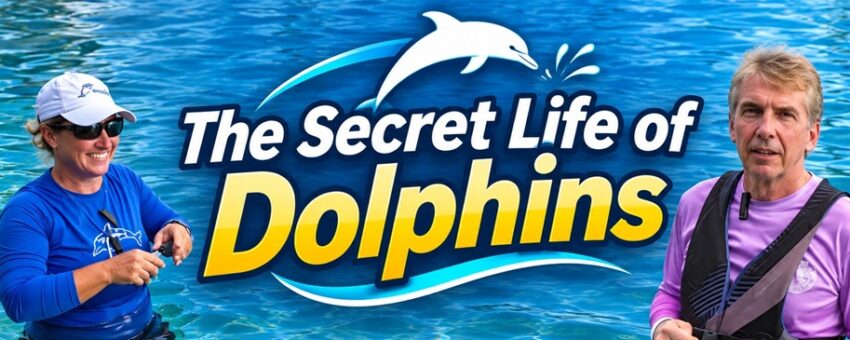
Join me, John the Dolphin Expert, as Bridget introduces us to the incredible world of dolphins at the St. Augustine Dolphin Park. You’ll see real dolphin behaviors, demonstrations, and personal interactions while learning about their intelligence, personalities, and natural abilities.
John the Dolphin Expert and dolphin trainer Bridget explore the fascinating abilities of bottlenose dolphins in St. Augustine, Florida.
One of the first questions I asked Bridget was whether dolphins have different personalities, just like people. Her answer was an enthusiastic yes!
Part of a dolphin trainer’s daily responsibilities involves getting to know each animal individually. Some dolphins enjoy playing with toys, while others respond particularly well to gentle touches and rubs. Understanding what each dolphin enjoys helps trainers develop positive and engaging relationships with them.
During our interview, Bridget explained that discovering these individual preferences is one of the enjoyable aspects of working with dolphins. Their personalities influence how they interact, play, and respond during training sessions.
For me, this is one of the most fascinating aspects of spending time with dolphins. You are meeting an individual animal with its own preferences and personality.
I’ve visited dolphin facilities for decades, and one ability that continues to amaze me is echolocation. How do dolphins navigate underwater without swimming into objects, especially when visibility is poor?
Bridget explained that dolphins can use both their eyesight and echolocation to understand their surroundings. Their eyes can work independently, providing awareness of what is happening around them.
When visibility is limited, dolphins can produce clicking sounds that are directed through a fatty structure in their forehead called the melon. These sound waves bounce off objects and return as echoes. The echoes are received through structures associated with their lower jaw and transmitted to their auditory system for processing.
This remarkable ability helps dolphins gather information about an object’s size, location, movement, and other characteristics.
In the ocean, echolocation can help dolphins locate prey, navigate murky water, and detect nearby animals or obstacles. It is one of nature’s most remarkable adaptations for underwater life.

As I get older, I understand the importance of regular medical checkups. But how do you perform a health examination on a dolphin that weighs approximately 400 pounds?
Bridget demonstrated how dolphins participate voluntarily in their own health care. Each morning, the training team conducts a general examination, checking the dolphins’ skin, eyes, mouths, and overall physical condition.
The dolphins have learned behaviors that allow trainers and veterinarians to perform examinations and collect medical samples. These can include:
Watching how calmly the dolphin participated in Bridget’s demonstration was impressive. These trained behaviors help make routine veterinary care easier to perform.
We also discussed Nellie, a remarkable dolphin who was born at this historic Florida dolphin facility and lived there for 61 years. Her story is an extraordinary part of the facility’s history.
Like many people, I can get bored doing the same thing every day. Naturally, I wanted to know how dolphin trainers provide variety and mental stimulation for these intelligent animals.
Bridget explained that the training team creates different activities throughout the day. These activities are often referred to as enrichment and can include toys, cognitive challenges, social interactions, and training sessions.
One particularly interesting demonstration involved asking a dolphin to perform a behavior and then giving her a signal to repeat it. The trainer could change the original behavior while continuing to use the same repeat signal.
This type of exercise encourages the dolphin to process information and respond to a changing situation.
Dolphins can also enjoy different enrichment activities, including:
Shaka, for example, particularly enjoys playing with footballs and basketballs. It’s another wonderful example of how dolphins have individual preferences.
I’ve always enjoyed action and excitement, so watching dolphins demonstrate their athletic abilities is something I never get tired of. Bridget described dolphins as the athletes of the ocean, and after watching Shaka and Tocoi jump, I could understand why.
Dolphins have streamlined bodies and powerful muscles that allow them to move efficiently through the water. Their tail flukes move vertically, generating the propulsion needed for swimming, acceleration, and impressive leaps above the surface.
Many of the jumping behaviors demonstrated during our interview are movements dolphins can also perform naturally in the ocean. Trainers use hand signals to request these behaviors.
If you are considering Swimming with Dolphins St Augustine, observing these animals move through the water can give you a new appreciation for their strength, agility, and grace.
Even after decades of being around dolphins, I sometimes find it challenging to identify individual animals. Bridget showed me several ways professional trainers recognize them.
In the wild, researchers can identify individual dolphins by examining their dorsal fins, including distinctive shapes, notches, and markings.
At the St. Augustine Dolphin Park, Bridget also recognizes individual dolphins by their faces, body sizes, coloration, and unique markings.
Shaka is larger and has distinctive freckles on her belly, while Tocoi has a more slender face and relatively uniform gray coloration. Both dolphins also have individual coloration patterns on their heads, which Bridget described as marbling.
Once Bridget pointed out these differences, I began noticing them myself. It was a wonderful reminder that every dolphin is unique.

Watching dolphins on video is fascinating, but meeting one in person can be an entirely different experience. If you are planning a vacation to Northeast Florida, there are two wonderful ways to get closer to these remarkable marine mammals.
The Dolphin Swim Immersion is an exciting 30-minute experience combining shallow-water interactions, deep-water swimming, snorkeling, and a dolphin ride. It is an excellent choice for guests who want an immersive experience with dolphins both above and below the water’s surface.
Discover the St. Augustine Dolphin Swim Immersion and Reserve Your Experience Here »
The Dolphin Encounter offers an opportunity to touch, play, and interact with a dolphin while remaining in shallow water. It is a wonderful choice for younger children, non-swimmers, and guests who prefer a more relaxed dolphin experience.
Discover the St. Augustine Dolphin Encounter and Reserve Your Experience Here »
Both experiences have participation requirements, so please review the individual program details before making your reservation.
Yes. Dolphins have individual personalities, preferences, and behaviors. Some enjoy playing with toys, while others particularly enjoy social interactions or gentle physical contact.
Yes. Dolphins use their eyesight to observe their surroundings underwater. They can also use echolocation to navigate and detect objects when visibility is limited.
Bottlenose dolphins demonstrate impressive learning abilities, problem-solving skills, memory, and complex social behaviors. They can learn to respond to signals and participate in cognitive exercises.
Professional dolphin trainers use enrichment activities such as toys, problem-solving exercises, training sessions, and social interactions to introduce variety into the dolphins’ daily routines.
Trainers recognize dolphins through individual characteristics such as facial features, body size, skin coloration, dorsal fin shapes, freckles, and distinctive markings.
Every time I spend time with dolphins, I gain a greater appreciation for their intelligence, individuality, and incredible natural abilities. My visit with Bridget, Shaka, and Tocoi was another memorable opportunity to learn more about these extraordinary animals.
If you’re visiting St. Augustine, Daytona Beach, Jacksonville, or Northeast Florida, I encourage you to explore the opportunities for Swimming with Dolphins St Augustine and discover what makes these animals so special.
Be sure to watch my video above, subscribe to the Dolphin World YouTube channel, and leave a comment sharing what you learned about dolphins.
See you on your next dolphin adventure!
John the Dolphin Expert
Dolphin World
Over 30 years of dolphin tourism experience.
John
Thanks for Reading My Dolphin World Blog Post!

Check Out My Other Websites...